Why St. Petersburg Homeowners Are Choosing to Sell in 2026
I have been having a version of the same conversation all year.
A homeowner reaches out, usually someone who has been in their home for seven, eight, ten years. They love the neighborhood. They have built real equity. And they have been sitting on the idea of selling for longer than they expected, mostly because of one thing: they locked in a 2% or 3% mortgage rate a few years ago, and giving that up has felt like leaving money on the table.
What I am noticing now is that more of those conversations are ending differently. People are moving forward.
Not because rates have dropped back to pandemic-era lows (they have not), but because life has a way of making the decision for you eventually. If you are thinking about selling a home in St. Petersburg in 2026 and trying to make sense of whether now is the right time, here is what I am seeing on the ground and what the data actually says.
What the Mortgage Lock-In Effect Actually Is
There is a term that gets used a lot in real estate right now: the mortgage lock-in effect. It sounds technical but the idea is simple.
Between 2020 and 2022, millions of homeowners locked in mortgage rates in the 2% to 3% range. When rates climbed above 6% and then 7%, selling meant trading that payment for one that could be hundreds of dollars higher per month, sometimes on the same type of home in the same neighborhood. For a lot of people, that trade just did not make sense.
According to Reuters, nearly two-thirds of outstanding mortgages in the United States still carry rates below 5%. So the financial friction is real and it has not gone away. The gap has been narrowing, though, and that is starting to shift behavior.
Why the Math Is Shifting for Home Sellers in 2026
Rates are not back to where they were. I want to be straightforward about that.
As of the first week of June 2026, the 30-year fixed mortgage rate averaged 6.53%, according to Freddie Mac. That is still meaningfully higher than the 3% range many current owners are sitting on, though lower than the 7% we saw in 2022 and 2023. Both Fannie Mae and the Mortgage Bankers Association project rates will stay between 6.1% and 6.4% through the rest of the year.
What that means practically is that the environment is more predictable than it has been in a while. And predictability matters, because it lets people stop waiting and start deciding.
It is not a dramatic unlock. It is a slow thaw.
Life Events Are Outweighing the Financial Calculus
Here is what I think is actually driving things more than any rate forecast: people's lives are not on pause.
A spring 2026 survey of more than 700 real estate agents by Coldwell Banker found that one in three home sellers nationally are giving up a sub-5% rate to list this year. Not because the numbers work out perfectly on paper, but because their situation requires a change. A growing family that has outgrown the home. An empty nester who no longer needs four bedrooms. A job relocation. A life event that simply cannot wait for a better rate environment.
I see this regularly in St. Pete. Owners who have been thinking about downsizing since 2022 are now actually doing it. People who wanted to be closer to family have stopped waiting for the perfect financial window. The rate is still part of the conversation, but it is no longer the only one.
What This Means for the St. Petersburg Real Estate Market
St. Pete is not just a mirror of national trends, and I think it is important to say that clearly.
The Tampa-St. Petersburg-Clearwater metro recorded year-over-year home price growth of approximately 2.5% as of the first quarter of 2026, according to HouseCanary. That is not the appreciation of 2021, but it is also not a correction. Values have held. Sellers who bought or refinanced during the low-rate period have largely kept the equity they built, which means most people in this market are not selling from a position of distress. They are selling from a position of strength.
Pinellas County median sale prices have held near $375,000, and the urban core of St. Pete continues to see real demand for well-maintained single-family homes in established neighborhoods. Buyers have not disappeared. What they have become is more deliberate, and they are gravitating toward homes that are priced honestly and show well.
The sellers who are struggling right now are the ones pricing to 2022 comps and hoping someone does not notice. The sellers who are succeeding are the ones who came in with accurate pricing, a clean presentation, and realistic expectations about what this market rewards.
How Established St. Petersburg Neighborhoods Are Performing
This is something I watch closely because it matters more than broad market averages.
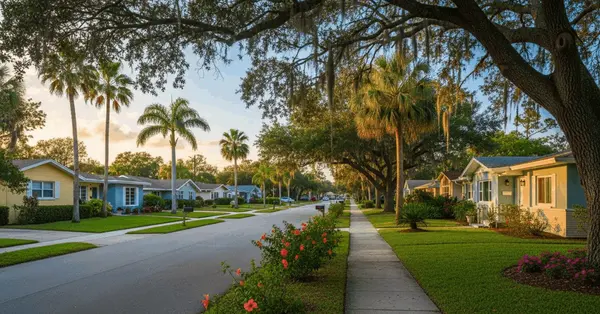
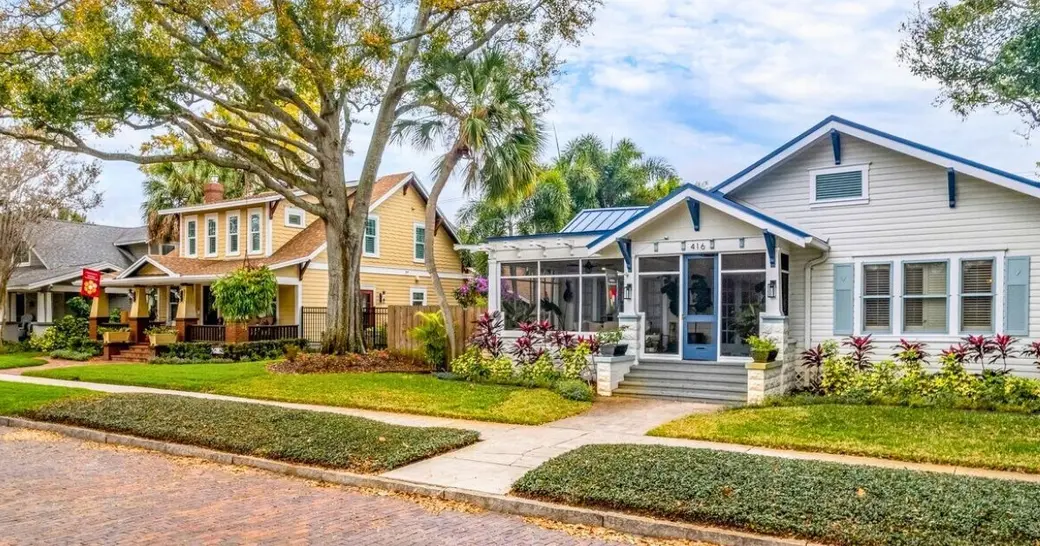
Neighborhoods like Historic Old Northeast, Historic Kenwood, Old Southeast, Crescent Lake, and Snell Isle have continued to perform with more consistency than the overall numbers suggest. The character of the street, walkability, proximity to downtown, the quality of the housing stock - these things hold buyer attention even when the broader market is slower. If you own in one of these areas, the buyer pool for your home is more stable than the headlines might lead you to believe.
Should You Sell Your St. Petersburg Home in 2026?
This is the question I get asked most often right now, and my honest answer is always: it depends on your situation, not on the market in the abstract.
Timing a move around mortgage rates is rarely the right framework. The rate environment shapes the terms of a transaction. It does not determine whether the move makes sense for your life. What I find more useful to work through with people is the full picture: what you would net from a sale after costs, what a replacement purchase would realistically cost you monthly, and what your equity position allows you to do next. Those variables are specific to your address and your circumstances, and they tell a more complete story than any rate forecast.
According to Florida Realtors, the equity advantage of homeownership in Florida metros including St. Petersburg has been especially strong over the past decade. Owners who have held for eight or more years here are sitting on real wealth. The question is not whether the market is perfect. It is whether this is the right moment for you.
If you want to work through that together, I am happy to pull the numbers for your specific home, no pressure and no obligation. Just an honest conversation about what the data says for your situation.
Frequently Asked Questions
Is now a good time to sell a home in St. Petersburg?
It depends on your specific circumstances. Sellers who are well-positioned, meaning their home is priced accurately, in good condition, and located in a neighborhood with consistent buyer demand, are still transacting successfully in the current market. Homes in Historic Old Northeast, Historic Kenwood, Old Southeast, Snell Isle, and similar established St. Petersburg neighborhoods continue to attract qualified buyers. The sellers who struggle are those who price for a 2022 market or bring homes to market with unresolved condition issues. If your equity is strong and your home is ready, 2026 is a reasonable time to sell, provided your expectations are calibrated to current data.
What is the mortgage lock-in effect?
The mortgage lock-in effect refers to the financial disincentive that has kept millions of homeowners from listing their homes since 2022. Owners who secured mortgage rates in the 2% to 3% range during the pandemic era have been reluctant to sell, because doing so means financing their next home at current rates, which are roughly double what they are paying now. That gap translates into hundreds of dollars more per month on a comparable purchase, which has been enough to keep many owners in place longer than they might have otherwise stayed.
How much equity do typical St. Petersburg homeowners have in 2026?
Owners who purchased or held property in the St. Petersburg market through the 2020 to 2022 appreciation period accumulated significant equity, much of which has been retained even as the market moderated. The exact position depends on when a home was purchased, the original price, and the current value of the specific property. A comparative market analysis gives the most accurate picture. Owners in established St. Petersburg neighborhoods who have held for eight or more years are generally in a strong equity position.
Will more inventory hurt my chances of selling in St. Petersburg?
Not necessarily. A gradual increase in inventory brings more buyers into the market who were previously waiting for homes to appear. The risk to sellers is not more inventory in general, but more inventory at the same price point in the same neighborhood without meaningful differentiation. Pricing accurately, presenting the home well, and working with current sales data are what determine outcomes, not inventory levels alone.
Do I have to give up my low mortgage rate if I sell?
Yes, if you are buying another home with financing. Whether that trade makes sense depends on your equity, your target purchase price, and what you plan to do with the proceeds. Some sellers who downsize are able to reduce or eliminate their mortgage entirely, which changes the rate conversation altogether. Others find that the life circumstances driving the move outweigh the monthly payment difference. The right framework is a full net sheet on your sale and a realistic monthly payment estimate on your replacement home, not a broad comparison of 2021 rates to 2026 rates.
The Bigger Picture
The mortgage lock-in effect has been one of the defining forces in this market for three years. It has never stopped people from moving entirely, and it is not doing so now. What it has done is raise the bar for the decision, which means the sellers entering the market in 2026 are doing so with clear reasons and genuine motivation. That tends to make for better transactions than the frenzy of 2021 and 2022, even if the pace feels slower. For well-positioned St. Petersburg homeowners who are ready, this is a reasonable environment to move in. The key is going in with accurate information, not optimism.
Kirby Drake is a Real Estate Advisor with Engel & Volkers South Tampa, serving buyers and sellers across St. Petersburg, South Tampa, and the Greater Tampa Bay area. If you have questions about what your home is worth or how to position a sale in the current Pinellas County market, reach Kirby at 813-702-2363 or kirby.drake@evrealestate.com. Additional resources are available at kirbydrakerealtor.com.
Market data referenced in this post reflects publicly available sources including Freddie Mac, Fannie Mae, Reuters, Coldwell Banker Real Estate, HouseCanary, and Florida Realtors. Figures are current as of June 2026 and are subject to change. This post is for informational purposes and does not constitute a comparative market analysis or opinion of value for any specific property.
Categories
- All Blogs (46)
- 2025 Tampa Real Estate Market (14)
- 2026 Market Trends (9)
- Buyer (5)
- Buyer Resources (1)
- Buying & Selling Strategies (1)
- Buying Tips (7)
- Education (5)
- Flood Insurance (2)
- Florida Condo Market (1)
- Florida Home Buyer (1)
- Florida Home Insurance (2)
- Home Buyer (10)
- Home Seller (13)
- Homeownership & Planning (1)
- Hurricane Relief Resources (2)
- Investments & Rentals (1)
- Investor Tips (2)
- Local Lifestyle & Community (1)
- Luxury Real Estate (1)
- Luxury Real Estate Insights (1)
- Market Insights (1)
- Market Reports (2)
- Market Updates (1)
- NAR Updates (1)
- Neighborhood Spotlight (5)
- Neighborhoods (1)
- New Construction (1)
- Pinellas County Real Estate Market (1)
- Property Investor (1)
- Real Estate Investment (1)
- Seller Resources (3)
- Selling Tips (9)
- South Tampa Real Estate (1)
- St. Petersburg Market (1)
- St. Petersburg Real Estate (3)
- St. Petersburg Real Estate Market (8)
- St. Petersburg, FL (6)
- Tampa Bay Luxury Real Estate Market (1)
- Tampa Bay Real Estate (1)
- Tampa Bay Rental Market (1)
- Tampa Home Buying (7)
- Tampa Real Estate (5)
- Tampa Real Estate Market (10)
Recent Posts